The problem with written reviews (and it's not what you think)
Written reviews aren't bad. They're just... easy to dismiss.
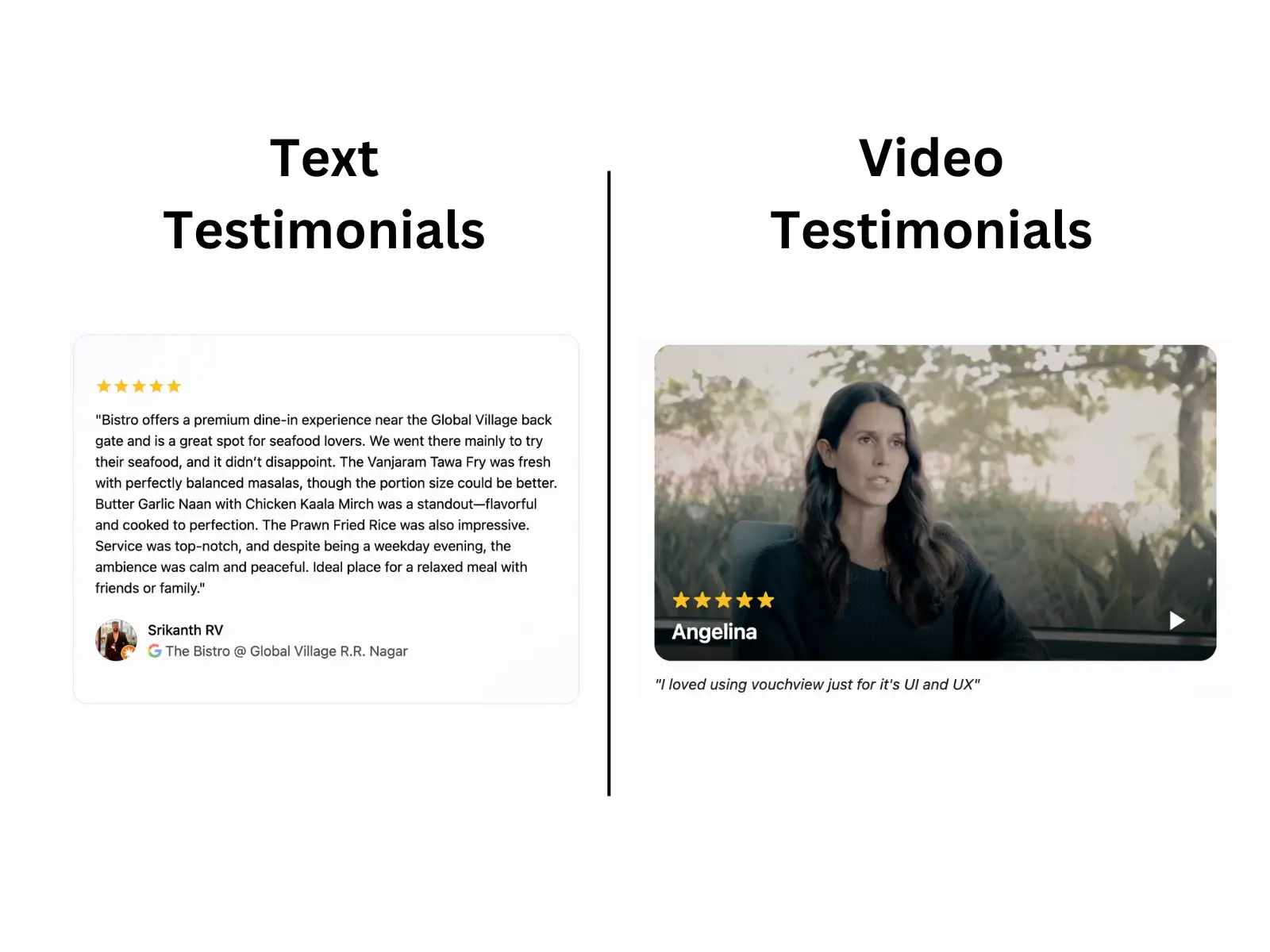
When someone lands on your site for the first time, they're skeptical. That's the default human setting. And a block of text with five stars next to it doesn't do much to break through that skepticism, because everyone knows those can be faked, cherry-picked, or written by the founder's cousin.
People aren't cynical for no reason. They've been burned by reviews before.
Video is different. There's something about watching a real human being talk about your product, with their actual face and voice and slightly awkward hand gestures, that signals "this is real." You can't fake genuine enthusiasm. You can't fake the specific details someone mentions when they're telling the truth about how something helped them.
That's the core of it. Video testimonials work because they feel true in a way that text usually doesn't.
What the data says (with actual sources)
Now let's talk numbers, because the research here is genuinely interesting.
Insivia's research found that people retain 95% of information from video vs just 10% from text. That's not a small difference. That's the difference between a customer remembering your product exists and forgetting it the moment they close the tab.
Zebracat's 2025 analysis found that landing pages with video testimonials converted 39% better than those with text reviews only. They also found that 71% of consumers felt more confident in a product after watching a video testimonial, compared to 38% who felt the same reading written reviews.
And placement actually matters more than most people realize. Video testimonials placed right below a pricing section drove stronger conversion lifts than the same testimonials buried at the bottom of the page, per Zebracat. Put social proof where doubt is highest and it does real work. Leave it on a dedicated page nobody clicks to and it does almost nothing.
Trustmary documented one client who put a single video testimonial on their checkout page and saw a 32% jump in sales. One video. Checkout page. That's it.
Why most businesses still aren't doing this
Here's the thing. Everyone nods along when you show them this data. And then they go back to not collecting video testimonials.
The reason is friction. Not laziness, friction.
Traditional video testimonials were genuinely painful to produce. ContentBeta found that 44% of enterprise companies still send a videographer to a customer's location to film them. Famewall's research found that 78% of marketers say it takes four or more weeks to create a single testimonial video. That's a month of back-and-forth for one piece of social proof.
Most small businesses hear that and just give up. Famewall found that 31% of SMBs say collecting video testimonials feels too complicated and decide not to bother at all.
But here's what's changed: you don't need any of that anymore. You don't need a videographer. You don't need scheduling. You don't need to coordinate anything. You just need a link.
That's the whole point of tools like VouchView. You create a simple branded collection form, your customer clicks the link, records a short video from their phone or laptop, and submits it. Done. No downloads, no confusion, no back-and-forth.
The friction that was keeping most businesses from doing this is basically gone. Which means the businesses that start now have a real head start over the ones still waiting.
What actually makes a video testimonial persuasive
Not all video testimonials are equal. A vague "I really love this product, five stars!" is better than nothing, but it's not moving the needle much.
The ones that actually convert share a few things in common.
They have a before and after. The best testimonials tell a story. Before I found this, I had this problem. After I used it, here's what changed. That structure works because it lets the viewer see themselves in the story.
They're specific. "My revenue went up" is forgettable. "I closed four deals in the first month after adding the widget to my pricing page" is memorable and credible. Specific details are the best signal that someone is telling the truth.
They address a real objection. The testimonials that do the most work are the ones where a customer says something like "I wasn't sure it would work for my type of business, but..." That directly disarms the doubt your prospect is already carrying.
They're a bit imperfect. Zebracat found that testimonials filmed in informal home or office settings scored 41% higher on trust than ones filmed in studio setups. A little stumbling, a dog walking by in the background, a moment of thinking before answering — these things don't hurt. They actually help, because they signal authenticity.
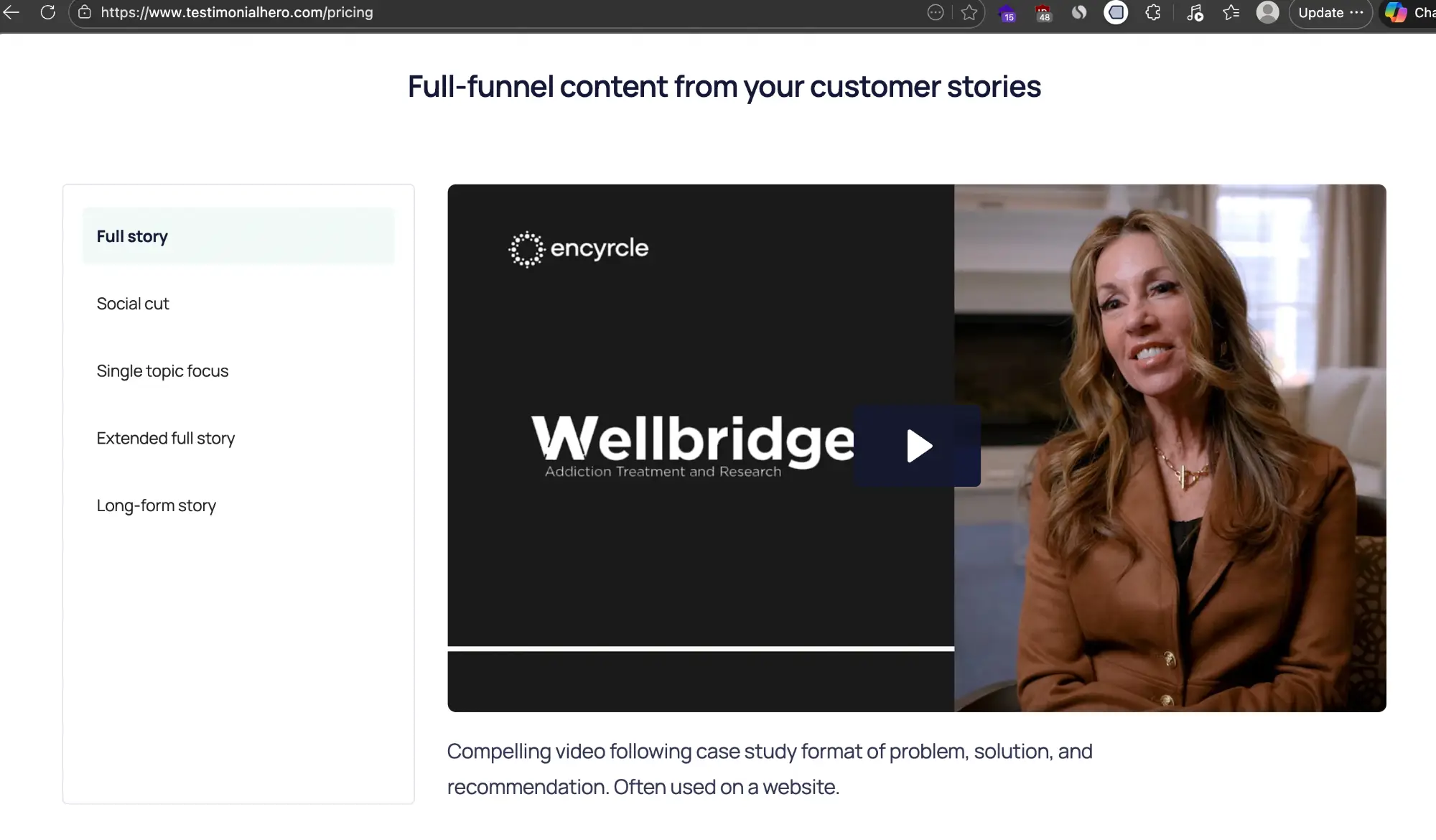
The ideal length, based on Wistia data cited by Testimonial Hero, is somewhere between 60 seconds and two and a half minutes. Long enough for a real story. Short enough to hold attention.

How to actually ask for them (without making it weird)
The most common reason businesses don't have video testimonials is they never asked. And the reason they never asked is it felt awkward.
Here's how to stop making it awkward.
Ask right after a win. The best moment to ask for a testimonial is immediately after a customer has a positive experience: successful onboarding, a problem you solved for them, a goal they hit using your product. That's when their enthusiasm is at its peak and the experience is fresh. Waiting two weeks is a mistake. By then, they've moved on mentally.
Make the ask effortless. The harder you make it, the lower your response rate. A vague email that says "let us know what you think" gets ignored. A specific message with a direct link to a one-page form that takes two minutes gets responses. VouchView gives you exactly that: a branded collection page you can share via a link, where customers can record video or write text with no friction.
Give them direction, not a blank page. Most people freeze when asked to talk on camera. They don't know what to say. Solve this by giving them two or three simple prompts: what was going on before you found us, what changed, what would you tell someone thinking about signing up. Those questions produce real, specific, story-driven answers that are actually useful as social proof.
Make it part of your process, not a one-off ask. The businesses that end up with 30 or 40 video testimonials didn't get them by asking 30 or 40 times individually. They built it into their workflow. A link in the post-onboarding email. A note in the project wrap-up. A follow-up after a good support interaction. When you systematize it, it stops feeling awkward because it just becomes part of how you do things.
Where to put them on your site
Most businesses who do collect testimonials make one mistake: they put them all in one place.
A dedicated testimonials page is fine to have, but it gets very little organic traffic. The people who need to be convinced by social proof are not going to that page looking for it. They're on your homepage, your pricing page, your checkout page. That's where doubt lives. That's where the testimonials need to be.
Put a video near the top of your homepage for first-time visitors. Put one right below your pricing table, where hesitation is at its highest. Put one in your checkout flow, especially if your abandonment rate is high. As HubSpot research cited by Famewall shows, putting a video in an email alone can lift click-through rates by 200 to 300%.
And VouchView makes the placement part easy: you get a single embed code, paste it wherever you want on your site, and the widget updates automatically as you collect more testimonials. No going back into the code every time you get a new one.
A simple system to keep testimonials coming in
Getting your first few testimonials is easy. Building a steady stream of them is what actually compounds over time.
Here's a simple system that works.
Identify the moments in your customer journey where satisfaction peaks: successful onboarding, first result, renewal, positive support interaction. Those are your collection triggers.
Set up a collection page with VouchView, with two or three guiding questions. This takes a few minutes. You get a shareable link.
Drop that link into your onboarding email sequence, your project wrap-up message, your renewal confirmation. Wherever you normally follow up with customers after a positive moment. Now the ask is automatic.
As testimonials come in, embed the widget on your homepage, pricing page, and wherever else you want it. When you get better ones, swap them in. Your social proof improves over time without you having to actively manage it.
That's it. It doesn't need to be more complicated than that.