Here's something that'll make you rethink your testimonial strategy: displaying 5-star online reviews can increase conversion rates by 270%. That's not a small bump, that's nearly tripling your conversions just by showcasing customer feedback.
But before you rush to plaster testimonials everywhere, there's a problem. Consumer trust in online reviews has plummeted from 79% in 2020 to just 42% in 2025. Trust has been cut in half in five years.
So what's the deal? Are testimonials incredibly effective or losing their power? The answer is both and understanding why makes all the difference.
Why Trust Is Dropping (And Why That Actually Matters)
The internet has a serious fake review problem. 92% of millennials can now identify fake reviews, and 67% of consumers are fed up with them.
The scale of the problem is staggering. According to recent research on review authenticity, Google has 10.7% fake reviews, Yelp has 7.1%, and TripAdvisor has 5.2%. When roughly one in ten reviews might be fake, skepticism makes sense.
But here's what's interesting: this doesn't mean testimonials are dead. 85% of consumers still trust online reviews as much as personal recommendations, and 95% of consumers read online reviews before making a purchase.
The game hasn't changed. Authentic testimonials are just more valuable now because they stand out against all the fake ones.
Video Testimonials Are Dominating
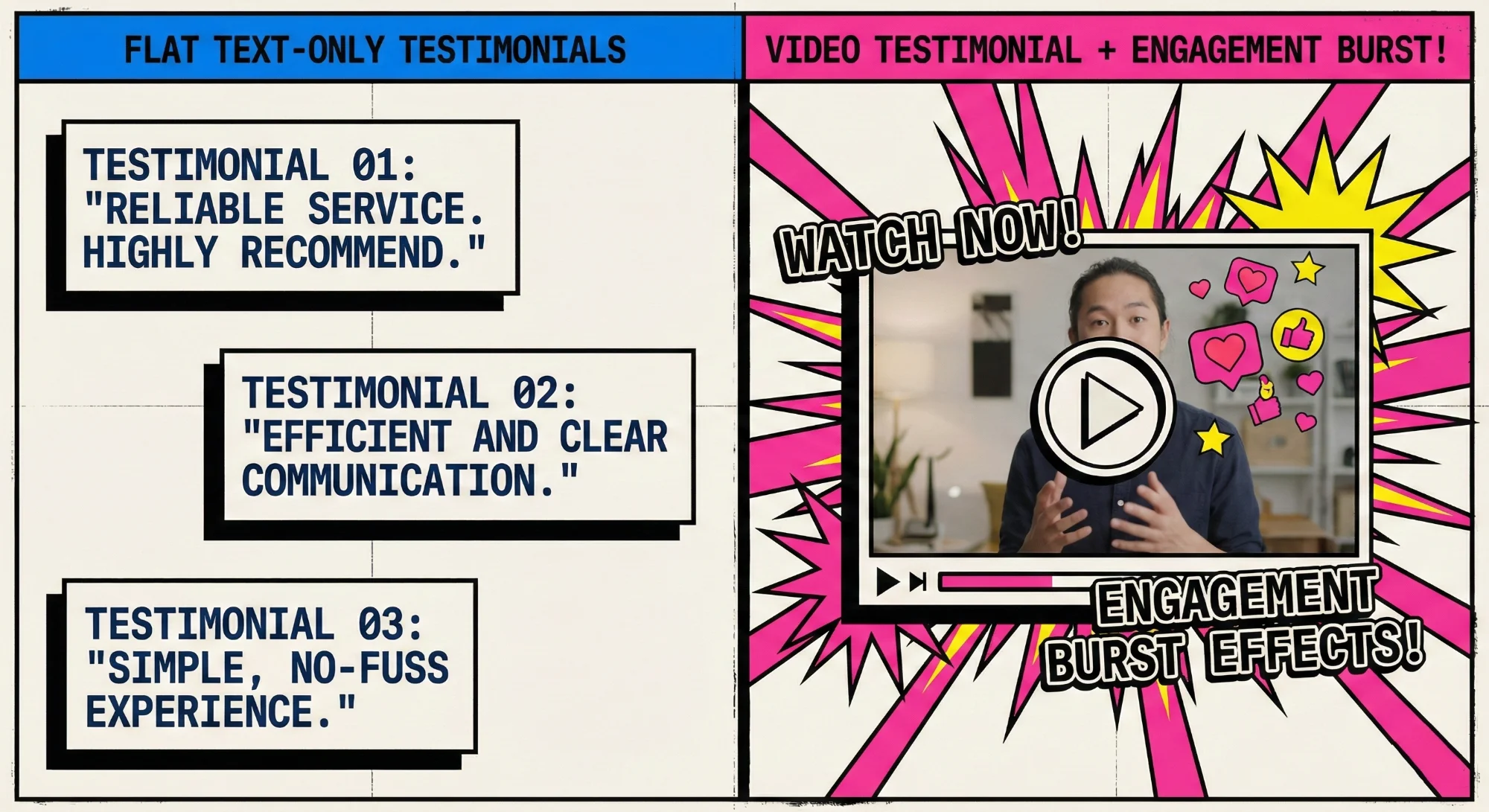
Let's talk numbers. Video testimonials can increase conversion rates by 80% compared to text-only reviews. That's not just better—it's in a completely different league.
More specifically, 72% of customers trust a brand more with positive video testimonials, and 88% of marketing teams see at least a 10% lift in campaigns with testimonial videos, with nearly half seeing a 25%+ lift.
Studies on video testimonial placement found that adding a single customer video testimonial near the checkout button increased completed purchases by 24%, while placing videos elsewhere on the page only resulted in a 13% lift. Location matters.
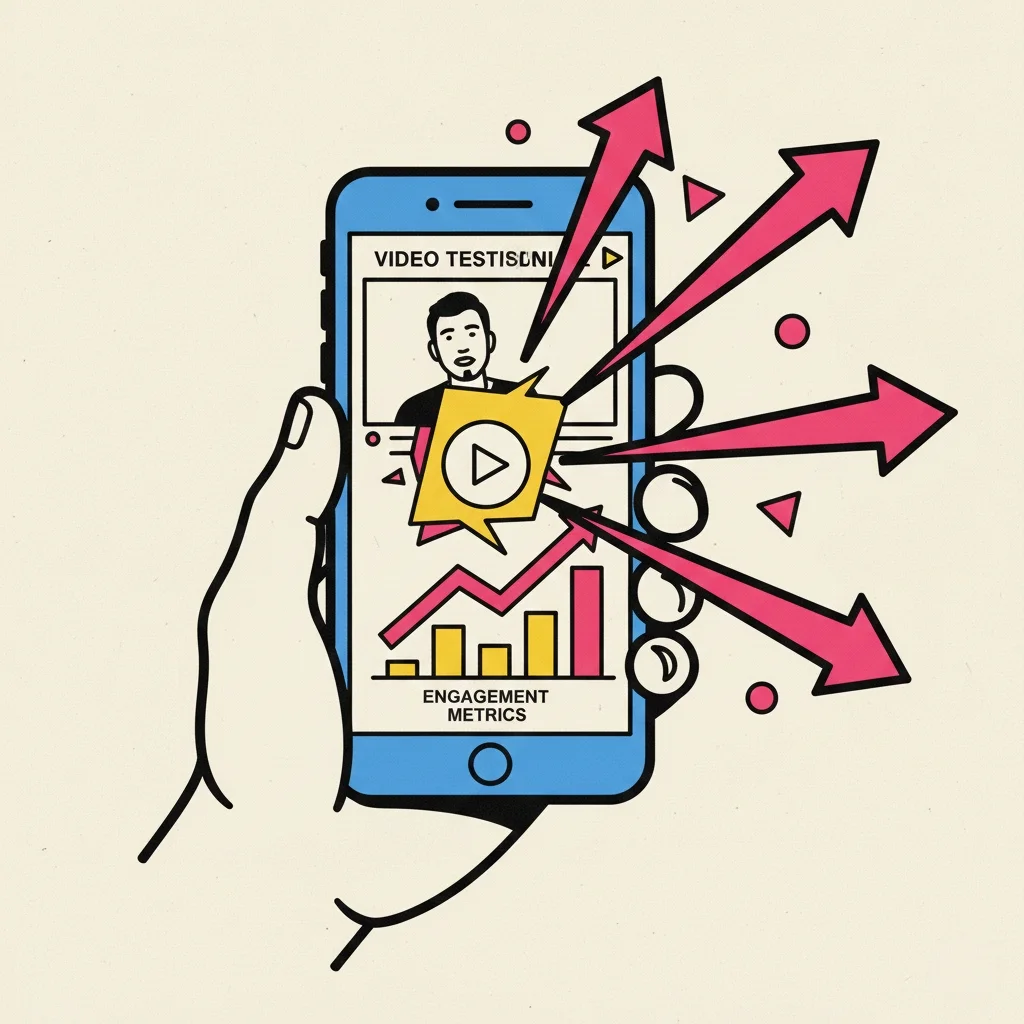
Even more compelling: landing pages with video testimonials saw a 39% boost in conversion compared to those with only written reviews, which converted at just 22%.
Text Reviews Still Work, But Only If Done Right
Video might be king, but text testimonials aren't obsolete. Including testimonials or reviews on landing pages can increase conversions by 34%. That's solid performance for something as straightforward as customer quotes.
The catch? More than 8 in 10 consumers prefer reviews with detailed text instead of just a star rating. Generic five-star ratings with no explanation don't move the needle anymore.
Consumers are doing their homework. They spend an average of 13 minutes and 45 seconds reading 10 online reviews before trusting a local business. They're not skimming they're researching thoroughly.
The Sweet Spot: Quality and Quantity
52% of consumers look for an average rating of at least 4/5 stars when researching a local business. Anything below that threshold and you're losing more than half your potential customers.
But ratings alone aren't enough. 46% of consumers look for a large number of reviews, and research shows that products with 5+ reviews are 270% more likely to sell than those without any.
Here's something counterintuitive: conversion rates peak with a 4.9 out of 5 rating, not 5.0. A perfect rating actually performs worse because it looks suspicious. Six out of 10 customers will keep researching products with a perfect five-star score instead of trusting them.
A few four-star reviews mixed in actually increase credibility.
Visual Proof Builds Trust
51% of consumers look for reviews that include photos. Visual proof builds trust in ways that text alone can't match.
eCommerce stores with rotating video testimonials on their homepage reported 34% more product page visits than those with static image reviews. Movement and authentic visuals grab attention.
This aligns with broader consumer behavior. People retain 95% of a video message versus only 10% of written text. Video isn't just more engaging it's dramatically more memorable.
Platform Matters More Than You Think
Not all review platforms carry equal weight. Google, Yelp, TripAdvisor, and Facebook account for 88% of all online reviews that consumers trust.
More specifically, Google houses 73% of all reviews, while Yelp accounts for just 6%. If you're focusing on one platform, Google should be it.
81% of consumers read reviews specifically on Google before visiting a business. That dominance makes Google Reviews non-negotiable for local businesses.
Social media platforms are also becoming review hubs. 40% of American consumers turn to Facebook to find business reviews, making it important to have a presence across multiple platforms.
The B2B Testimonial Difference
Business buyers behave differently than consumer buyers. 76% of B2B buyers find product and service review websites trustworthy, and 21% say finding good customer references is the roadblock to making SaaS purchasing decisions.
For SaaS specifically, the data is striking: video testimonials raised free-to-paid conversion rates by 46%, while demo-only funnels converted at 27%. You're essentially doubling your conversion rate just by adding customer testimonials to your funnel.
56% of B2B software buyers consider how much users like the product, making peer reviews and testimonials crucial for enterprise sales.
Why Responding to Reviews Matters
Here's something most businesses overlook: 56% of consumers prefer businesses that respond to reviews. Just having testimonials isn't enough, you need to engage with them.
The expectations are even higher for negative reviews. 53% of customers expect a response to negative reviews within a week, yet 87% of businesses don't meet this expectation.
But here's the opportunity: 79% of people are "likely" or "highly likely" to leave a positive online review if the business turned a negative experience into a positive one. Responding to reviews isn't just damage control, it's an opportunity to create new positive testimonials.
The Power of Actually Asking
Most businesses don't actively collect testimonials, which is a missed opportunity. 80% of consumers were prompted by a local business to leave a review in 2025, and 69% of customers have left reviews after being prompted.
Even more interesting: 65% of consumers said that if a business asked them to write a review, they would write a more positive review. People naturally lean positive when directly asked versus writing unsolicited reviews.
The channel matters too. 40% of people report being likely to leave a review when requested via email, while 27% are likely to do so when requested in person.
What This Means for Your Business in 2026
The data paints a clear picture. Testimonials work but only if you're doing them right.
Video testimonials dramatically outperform text. Strategic placement near decision points multiplies effectiveness. Authenticity matters more than polish. And having a system to consistently collect testimonials makes all the difference.
This is where tools like VouchView become essential. Instead of expensive video production that takes weeks, modern platforms let customers record quick testimonials from their phones in minutes. That ease of use directly translates to more testimonials and better conversion rates.
The numbers are stark: 92% of consumers are hesitant to complete a purchase when there aren't any customer reviews. You're not just missing out on extra conversions—you're actively blocking sales without testimonials.
Looking Ahead: What's Working in 2026
A few clear trends are shaping testimonial effectiveness in 2026:
Authenticity is non-negotiable. With 75% of consumers concerned about fake reviews and 83% saying they'd avoid a business that engages in fake review practices, cutting corners will cost you.
Video continues dominating. 91% of businesses are using videos as a marketing tool in 2025, and testimonials fit naturally into that strategy.
Multi-platform presence matters more. Consumers check multiple sources before buying. 91.1% of consumers typically read at least one review before purchasing, with 54.7% reading at least four reviews.
Recency counts. 73% of consumers only trust reviews left in the last month. Fresh testimonials signal you're actively serving customers right now.
Making Testimonials Work for You
So what should you actually do?
First, make it easy for happy customers to share their experiences. Every point of friction you remove increases the likelihood someone will actually record that testimonial. Platforms like VouchView excel at this removing the technical barriers that typically prevent customers from submitting video testimonials.

Second, ask for specifics. Don't just request "a review." Ask: "What problem were you trying to solve?" and "What changed after using our product?" Specific details drive conversions far more than generic praise.
Third, showcase diversity. Different customer types, different use cases, different outcomes. This helps potential customers see themselves in your testimonials.
Fourth, keep them fresh. Testimonials from 2022 or a decade from now don't carry the same weight as ones from last month. Regular updates signal that you're actively delivering value right now, not just in the past.
The Bottom Line
Are testimonials effective in 2026? The data is overwhelming: yes, absolutely.
But the testimonials that worked five years ago won't cut it today. Generic quotes don't convert. Perfect 5.0 ratings look suspicious. Text-only reviews underperform video by massive margins.
What works now is authentic, specific, video-based social proof strategically placed throughout your customer journey. You need volume not just a handful of testimonials, but a steady stream of fresh feedback that shows you're actively serving customers. We are helping businesses like your easily collect, manage and display testimonials through different widgets at VouchView.
The businesses winning with testimonials in 2026 are the ones making it ridiculously easy for happy customers to share their experiences. Modern tools remove the friction from video testimonial collection, letting customers record and submit feedback in minutes instead of requiring professional production.
93% of consumers say they read online reviews to influence their purchase decision. If you're not actively collecting and showcasing testimonials, you're fighting an uphill battle against competitors who are.
The data doesn't lie. Testimonials work. The question is whether yours are actually doing their job.